A Filterbuy technician runs a pressure test in a St. Cloud home and hands the homeowner a number: 38. That’s the percentage of conditioned air leaking out before it reaches a single room.
Most homeowners here don’t know their leakage rate. They know the house never quite cools evenly. They know the energy bill keeps climbing. They know the air feels stale no matter how often they swap the filter. Those are symptoms. Leaky ductwork is usually the cause.
This page covers when to fix it, what the process involves, and how to protect the investment after the work is done — with the seasonal specifics that Central Florida’s climate demands. Duct sealing timing in St. Cloud isn’t the same as it is in Atlanta or Phoenix. The humidity, the near-year-round AC load, and the subtropical heat cycle here create their own rules.
TL;DR — Quick Answers
Best time to seal ducts in St. Cloud? Early fall — September through November, when humidity drops and AC demand eases.
Second-best window? Spring (March–May), before peak cooling season and Florida’s high pollen load take hold.
How much energy do leaky ducts waste? Between 25 and 30 percent of all conditioned air escapes before reaching a room.
What technology does Filterbuy use? Aeroseal — a patented pressurized sealant injected from inside the duct system, no demolition required.
Is duct sealing the same as duct cleaning? No — cleaning removes debris; sealing repairs the structural gaps that let conditioned air escape.
How long does Aeroseal last? Ten years or more when paired with regular HVAC maintenance and consistent filter replacement.
What filter should I use after sealing? A MERV 11 to MERV 13 filter for the strongest allergen control in a properly sealed system.
Does Filterbuy serve commercial properties? Yes — residential and commercial HVAC throughout St. Cloud and Osceola County.
Top Takeaways
Early fall is the best scheduling window — lower humidity, reduced AC load, and better technician availability align between September and November.
Spring is the backup — a viable second window before the heat and pollen season peak.
Leaky ducts waste 25–30% of conditioned air, making duct sealing one of the highest-ROI HVAC maintenance decisions a St. Cloud homeowner can make.
Aeroseal seals from the inside out with zero demolition, and every Filterbuy service includes a documented before-and-after leakage report.
Duct sealing and duct cleaning are separate services — sealing fixes structural leaks while cleaning removes debris; both improve HVAC performance.
Sealed ductwork makes every air filter more effective by ensuring all circulating air moves through the filtration system as designed.
MERV 11–13 filters deliver the strongest allergen control in a sealed system, handling pollen and humidity conditions specific to Central Florida.
The EPA documents indoor air running two to five times more polluted than outdoor air — sealed ductwork is one of the most direct corrective steps available.
Why Timing Matters for Air Duct Sealing in Central Florida
Duct cleaning and air duct sealing are two different jobs. Duct cleaning removes the debris, dust, and buildup that collects inside your ductwork. Air duct sealing addresses the cracks, gaps, and failed joints that let conditioned air escape before it reaches any room — a structural problem that cleaning alone can’t fix.
St. Cloud and Osceola County run their air conditioning nine to ten months out of the year. That constant demand creates thermal stress on duct joints and seals that doesn’t exist in cooler climates. Joints expand and contract. Standard tape degrades. Gaps form. The U.S. Department of Energy documents that leaky ducts can waste up to 30% of conditioned air in a typical home — air you paid to cool that never made it past the attic.
The right scheduling window maximizes sealant adhesion and limits disruption. It also determines which contaminants get locked out before peak pollen or peak humidity season takes hold.
The Best Time of Year for Air Duct Sealing: A Season-by-Season Guide for St. Cloud
Spring (March–May): Get Ahead of the Heat
Spring is the second-best window — and a solid one. Your HVAC is transitioning from limited heating use into full-time cooling mode, which means the system isn’t under peak load during the service appointment. Technicians can still access attic spaces before summer turns them into 130-degree working hazards. Moderate temperatures keep the job clean and minimize household disruption.
Spring also opens Florida’s high pollen season. Sealing ductwork before outdoor allergen counts peak keeps those particles out of your home ventilation system before they get the chance to recirculate all summer.
Summer (June–August): High Stakes, Hard Timing
Summer isn’t the first choice. AC systems run continuously in St. Cloud, which makes any full-system shutdown genuinely disruptive. Attic temperatures routinely exceed 130°F, affecting working conditions and sealant cure time.
That said, summer doesn’t rule out a repair. If energy bills have spiked or indoor air quality has dropped noticeably, the problem needs fixing regardless of what month it is. Summer also surfaces the most duct failures — thermal expansion stress pushes compromised joints past their limit. When that happens, we schedule the repair and get it done.
Fall (September–November): The #1 Recommended Window
Early fall is the best time of year for air duct sealing in St. Cloud. Lower humidity — a genuine rarity in Central Florida — reduces moisture interference with sealant curing. Reduced AC demand means the system can be serviced with minimal disruption. And the transition from near-constant cooling to any meaningful heating use creates the right moment to address duct integrity before either system runs at full load.
There’s a scheduling advantage here too. Fall sits between the summer peak and the holiday rush. Technician availability is higher, appointments are easier to secure, and the work isn’t rushed. For homeowners planning to schedule Aeroseal HVAC air duct sealing in St. Cloud, September or October is the move.
Winter (December–February): A Usable Backup
Florida’s mild winters offer a legitimate second opportunity, particularly for commercial HVAC projects. Holiday downtime creates access to commercial spaces that are impossible to service during operating hours. Humidity dips slightly versus summer — enough to support good sealant adhesion. For residential homeowners who missed the fall window, early winter works.
What Air Duct Sealing Does for Your St. Cloud Home or Business
Sealed ductwork doesn’t just stop air from escaping — it changes how the whole system performs. Here’s what St. Cloud homeowners typically see after a professional sealing:
Better Indoor Air Quality. Sealed ducts stop unfiltered attic air, insulation particles, and allergens from bypassing your air filters and entering your living spaces. For allergy and asthma households, this is usually the most immediate improvement.
Lower Energy Bills. Air that stays inside the duct system means your HVAC runs less to hold the same temperature. In Florida’s cooling-heavy climate, that reduction adds up fast.
Longer HVAC System Life. Less strain on the equipment means fewer repairs and a longer service life. Pair that with a regular filter replacement schedule and you’re protecting the investment on both ends.
Even Air Distribution. Sealed ducts restore proper duct airflow so every room gets consistent, balanced cooling and heating. No more hot spots. No more rooms that can’t hold a temperature.
Better Allergen Control. Sealed ducts and high-MERV-rating air filters work together. One controls structural infiltration; the other handles what’s already circulating. Together, they deliver a genuine clean air solution.
How Filterbuy Seals Your Ducts: The Aeroseal Difference
Filterbuy’s certified HVAC technicians use Aeroseal HVAC air duct sealing in St. Cloud — a patented pressurized polymer sealant system that works from the inside out. No demolition. No drywall removal. No access panel cutting.
A pressurized aerosol of polymer sealant particles gets injected into your duct system. The particles travel with the airflow until they reach a gap, crack, or failed joint — then bond to the edges of that opening and build up a permanent seal. Every leak in the system gets addressed at once, including the ones you can’t see or physically reach.
Standard duct tape is not a substitute. It degrades in attic heat and humidity within months, and the leakage picks up right where it left off. Aeroseal-sealed ducts are engineered to hold for ten years or more with proper HVAC maintenance. Every Filterbuy Aeroseal service includes a documented before-and-after leakage report — you see the actual numbers and know exactly what changed.
Our technicians are NATE-certified and serve residential and commercial properties throughout St. Cloud and Osceola County. In our experience working across Central Florida homes, pre-sealing leakage rates routinely exceed national averages. The combination of system age, humidity cycling, and near-year-round operation accelerates duct wear here faster than in most U.S. markets.
To learn more about how air filters work alongside sealed ductwork for cleaner indoor air, see our filter resources below.
Complete the System: Air Duct Sealing + the Right Air Filters
Sealing your ducts is step one. Matching that sealed system with the right air filter is step two — and the performance difference between both steps combined versus either one alone is measurable.
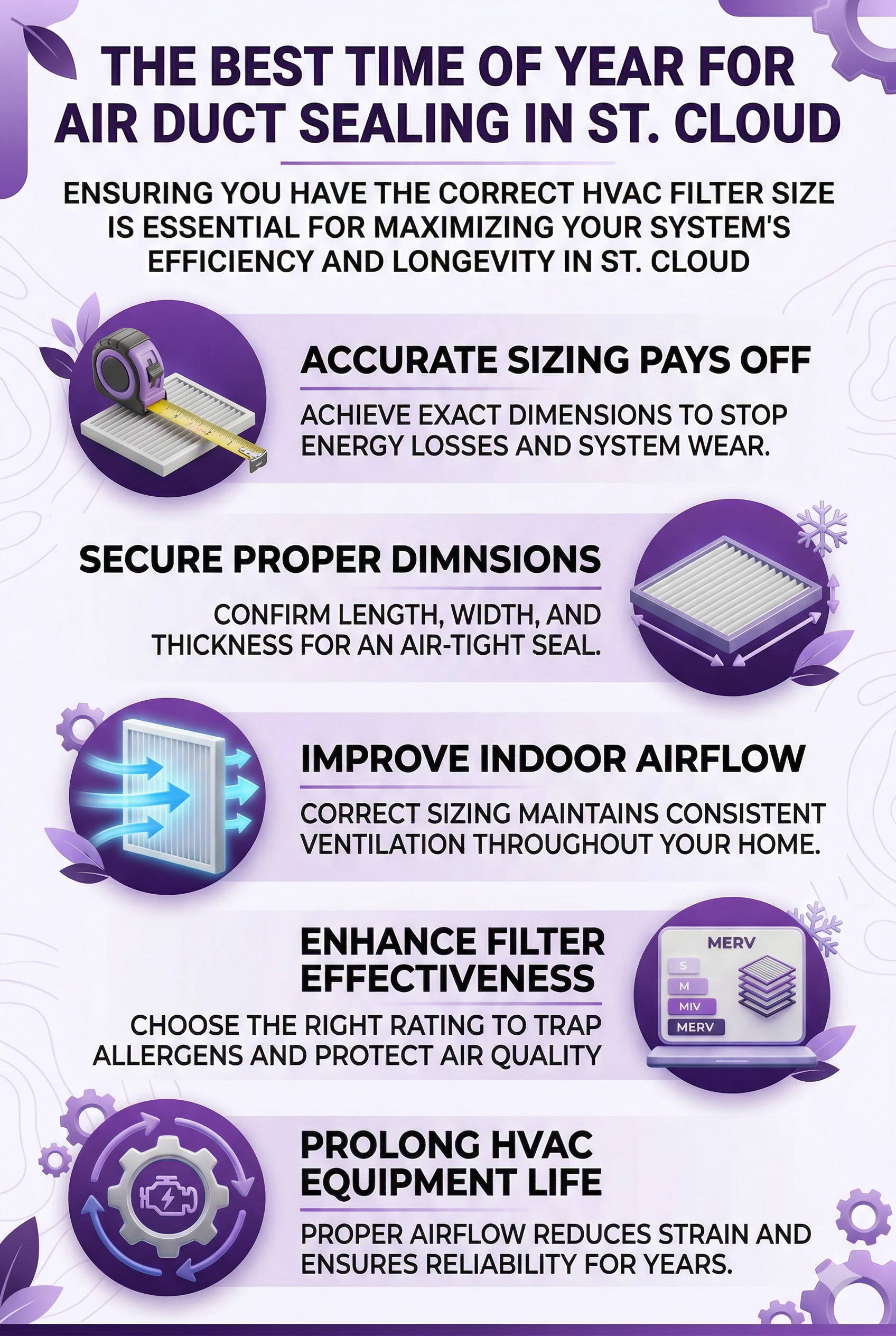
A leaky duct system cuts into filter performance. When conditioned air bypasses your filter through gaps and cracks in the ductwork, contaminants get into your home regardless of the filter rating you’re running. Seal the ducts, and every cubic foot of circulating air passes through the filter the way the system was designed. The filter investment starts doing its actual job.
Sealed systems also support higher-efficiency filters. A MERV 11 or MERV 13 filter in a leaky duct system creates pressure drop problems that put unnecessary strain on your HVAC equipment. In a sealed system, that same filter captures allergens, dust, and fine particles without the airflow resistance penalty. Visit Filterbuy’s MERV rating guide to find the right match for your system.
For a complete home ventilation maintenance plan: Aeroseal service checks plus a consistent furnace filter and air filter replacement schedule. In St. Cloud’s humidity and pollen environment, Filterbuy recommends filter changes every 60 to 90 days.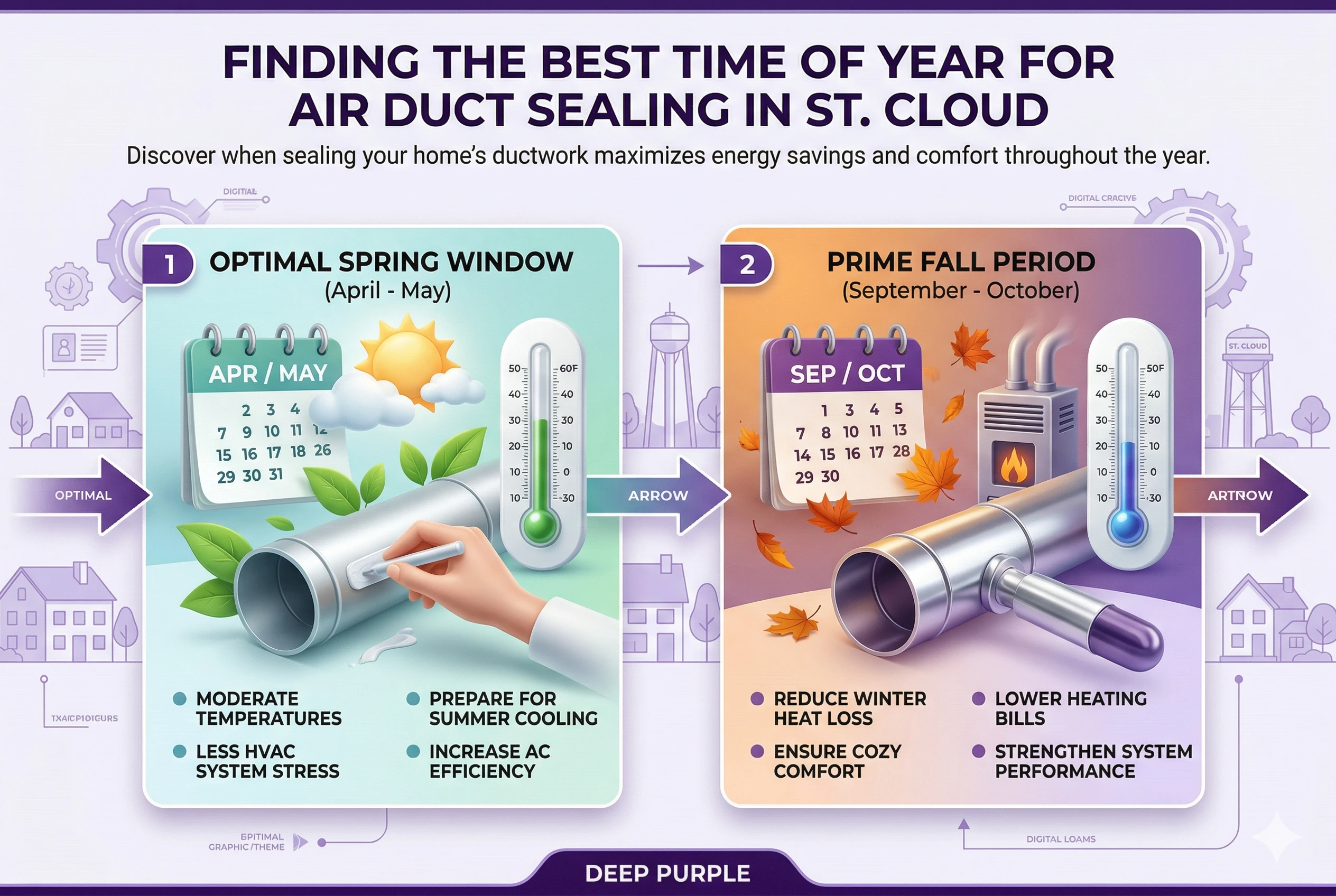
“In Central Florida, we see duct systems lose 30 to 40 percent of their conditioned air before it reaches a single room — not because the equipment failed, but because nobody sealed the ductwork. One Aeroseal appointment changes that number permanently.”
Essential Resources
Deciding when — and whether — to seal your ducts is easier when you’re working from verified sources, not guesswork. These seven resources cover the science, the standards, and the health case behind air duct sealing in Central Florida.
1. The Federal Benchmark on Duct Energy Loss
The U.S. Department of Energy’s duct sealing guidance documents why leaky ducts waste energy, how to identify duct performance problems, and why professional sealing outperforms DIY repairs for long-term duct airflow integrity. The primary source for the 25–30% conditioned air loss figure cited throughout this page.
Source: energy.gov/energysaver/duct-sealing
2. The Indoor Air Quality Baseline Every Homeowner Should Know
The EPA’s Indoor Air Quality hub covers how HVAC system integrity directly affects pollutant concentration levels inside residential and commercial buildings. Foundational reading for any St. Cloud homeowner managing allergen control or respiratory health concerns.
Source: epa.gov/indoor-air-quality-iaq
3. The Energy Efficiency Case for Sealing Your Ducts
ENERGY STAR’s duct sealing program explains how sealed and insulated ducts reduce HVAC energy consumption, improve home comfort, and may qualify homeowners for utility rebates. The source for the estimated 20% reduction in heating and cooling costs documented in the statistics section below.
Source: energystar.gov/campaign/seal_insulate/ducts
4. The Health Angle: What Happens When HVAC Systems Pull In Outdoor Air
The CDC’s indoor environmental quality guidance connects HVAC duct integrity to occupant health outcomes — particularly for respiratory conditions, mold exposure, and contaminant infiltration in residential buildings. Directly relevant for St. Cloud households managing allergy or asthma symptoms.
Source: cdc.gov/niosh/topics/indoorenv
5. Florida-Specific Climate Guidance on Home Energy Performance
The University of Florida’s IFAS Extension publishes research-backed guidance on energy efficiency and HVAC performance specific to Florida’s humid subtropical climate. The regional context here is different from national averages — this source documents the specific performance demands that Central Florida conditions place on ductwork.
Source: edis.ifas.ufl.edu
6. The Industry Standard for Duct Inspection and Maintenance
ASHRAE sets the ventilation and indoor air quality standards referenced by HVAC contractors and building engineers nationwide. Their guidelines establish minimum ventilation rates and air quality benchmarks that duct sealing helps residential and commercial systems meet and maintain.
Source: ashrae.org/technical-resources/standards-and-guidelines
7. HUD’s Guidance on Residential Duct Efficiency and Indoor Air Quality
The U.S. Department of Housing and Urban Development addresses duct efficiency and indoor air quality as interconnected components of healthy housing — including how duct leakage affects both energy performance and pollutant infiltration in American homes.
Source: hud.gov/program_offices/healthy_homes
Supporting Statistics
These three statistics come from federal agencies and are the same data points Filterbuy’s technicians reference when explaining duct performance to homeowners in Osceola County. In fourteen years of field work in Central Florida, we’ve seen these numbers play out in actual leakage reports — they’re not averages that don’t apply here. They’re often conservative.
1. Up to 30% of Your Conditioned Air Never Reaches a Room
Leaky ducts waste between 25 and 30 percent of conditioned air in a typical U.S. home.
In St. Cloud, where AC runs nine to ten months of the year, that loss compounds with every billing cycle.
Sealing the ductwork stops the loss at the source — not by running the system harder, but by keeping what you already paid for inside the system.
Source: energy.gov/energysaver/duct-sealing
2. Indoor Air Is Often 2–5x More Polluted Than the Air Outside
The EPA estimates indoor air pollutant concentrations run two to five times higher than typical outdoor levels.
In some cases, the differential exceeds 100 times — particularly in homes with duct leakage pulling in attic air, insulation particles, and unconditioned outdoor air.
Americans spend approximately 90% of their time indoors. The quality of that air is not a background variable.
Source: epa.gov/indoor-air-quality-iaq/introduction-indoor-air-quality
3. Sealing Ducts Can Cut Heating and Cooling Costs by 20%
ENERGY STAR estimates that sealing and insulating ducts in unconditioned spaces reduces total heating and cooling costs by approximately 20%.
For a Florida household spending heavily on year-round cooling, that’s a meaningful annual reduction — not a rounding error.
The savings are ongoing. Every month the sealed system runs, the investment pays forward.
Source: energystar.gov/campaign/seal_insulate/ducts
Seasonal Timing Is Real. But the Best Time Is Before the Problem Gets Worse.
The honest answer: the best time for air duct sealing in St. Cloud isn’t a fixed date. It’s when your duct system has developed enough leakage to affect your home’s comfort, air quality, or energy costs. In Central Florida’s climate, that threshold arrives faster than most homeowners expect.
Early fall is still the optimal window for most households here — September through November, when lower humidity, better technician availability, and reduced AC demand align in ways that don’t happen any other time of year. If you’ve been weighing the decision, that’s the window to act.
But the “wait for the right season” logic breaks down the moment the problem is already visible. Spiking energy bills, rooms that won’t hold a temperature, increased allergy or asthma symptoms indoors — those signals mean the ductwork is compromised now. In our field experience across Osceola County, the homes with the worst leakage rates are rarely the ones where the owners planned ahead. They’re the ones where the early warning signs sat unaddressed for a year or two.
Schedule an inspection. Get your actual leakage number. Then decide with real data in front of you — not a sales pitch, not a rough estimate.
Next Steps for St. Cloud Homeowners and Property Managers
Schedule a duct leakage inspection. A certified Filterbuy HVAC technician assesses your current duct system and documents your leakage rate. That number gives you a clear baseline — and a fact-based case for whether sealing makes sense now or in the near future.
Book Aeroseal service in the fall window. If the inspection confirms significant leakage, securing a September-through-November appointment locks in the best sealing conditions and avoids summer and holiday scheduling delays.
Upgrade your air filters. Once the ducts are sealed, a MERV 11 or MERV 13 filter delivers meaningfully better allergen control without the pressure drop concerns that plagued the leaky system.
Set a filter replacement reminder. In St. Cloud’s humidity and pollen environment, Filterbuy recommends filter changes every 60 to 90 days. Consistent replacement keeps a newly sealed system running at its best.
Plan your next inspection. Aeroseal-sealed systems typically hold for ten years or more, but a duct integrity check every two to three years is a reasonable maintenance cadence for Florida’s climate.
Frequently Asked Questions About Air Duct Sealing in St. Cloud
Q: What is the best time of year for air duct sealing in St. Cloud, FL?
A: Early fall — September through November. Key reasons:
Lower humidity reduces moisture interference with sealant curing.
Reduced AC system load means minimal service disruption.
Better technician availability versus summer peak.
The transition between cooling and heating seasons is the natural window to address duct integrity before either system runs at full demand.
Spring (March–May) is the second-best window.
Q: How does air duct sealing improve indoor air quality?
A: Sealed ducts close the structural gaps that let unfiltered air bypass your HVAC system’s filters. Results include:
Fewer allergens, dust particles, and mold spores entering living spaces.
Better performance from your existing air filters — all circulating air passes through the filtration system as designed.
Measurably cleaner air when paired with a MERV 11–13 filter, particularly for allergy and asthma households.
Q: Is air duct sealing the same as duct cleaning?
A: No. These are two different services:
Duct cleaning removes debris, dust, and contaminants from inside the ductwork using vacuums and brushes.
Air duct sealing (Aeroseal) repairs structural gaps and cracks that cause conditioned air to escape the system entirely.
Both improve HVAC performance. They’re often recommended in sequence for older or high-use duct systems.
Q: How much energy can I save by sealing my air ducts?
A: Documented estimates from federal sources:
DOE: Leaky ducts waste 25–30% of conditioned air in a typical home.
ENERGY STAR: Sealing and insulating ducts can reduce total heating and cooling costs by approximately 20%.
In Florida’s cooling-dominant climate, those savings compound with near-continuous AC use year-round.
Q: How often should air ducts be sealed?
A: General maintenance schedule for St. Cloud:
Inspection interval: Every 2–3 years in Central Florida’s humid subtropical climate (vs. the national 3–5 year standard).
Re-sealing: Aeroseal systems typically hold for 10+ years with proper HVAC maintenance and regular filter replacement.
Filter replacement: Every 60–90 days in St. Cloud’s pollen and humidity environment.
Q: Does air duct sealing work for commercial buildings?
A: Yes. Key points for commercial property owners:
Commercial HVAC systems carry more ductwork than residential systems — leaks are more costly and harder to detect.
Aeroseal technology works for both residential and commercial HVAC systems.
Filterbuy serves commercial properties throughout St. Cloud and Osceola County.
Commercial scheduling during low-occupancy periods (holidays, off-hours, weekends) keeps service disruption minimal.
Ready to Seal Your Ducts Before the Season Shifts?
Don’t let another season pass with leaky ducts draining your energy budget. Filterbuy’s certified HVAC technicians bring professional Aeroseal duct sealing directly to your St. Cloud home or business — and hand you a documented before-and-after report that shows exactly what changed. Schedule service or request your free duct assessment below.
⇨ Schedule Your St. Cloud Duct Sealing
Not sure if you need sealing?
Learn more about HVAC Care from one of our HVAC solutions branches…
Filterbuy HVAC Solutions - Miami FL - Air Conditioning Service
1300 S Miami Ave Apt 4806 Miami FL 33130
(305) 306-5027